
introducing OTV's strategic vision (2026-2030)
BY ELIJAH MCKINNON
Co-Founder & Chief Executive Officer
& OTV’S GOVERNING BODY
Dayo Lamolo
Karim Ahmad
AJ Christian
Makiah Green
Christine Davila
Jess King
Fernando Garcia
Kat Evasco
Hilesh Patel

“what we cannot imagine cannot come into being.”
bell hooks
executive summary
Open Television (OTV) is a non-profit streaming platform and media incubator supporting intersectional storytellers. Over the past decade, we have grown from a bold experiment in Chicago into a globally recognized institution—redefining how media is made, distributed, and remembered.
As we enter our second decade, we are moving with renewed clarity and conviction: this five-year strategic vision outlines our roadmap for sustainable growth, narrative power, and cultural transformation—guided by the belief that intersectional storytelling is not a trend, but an infrastructure for a just and pluralistic future.
mission
Open Television (OTV) is a streaming platform and media incubator sustaining the future of intersectional storytelling. We invest in artists and their ecosystems through equitable development, innovative distribution, and community-rooted exhibition. By centering care, creativity, and collaboration, OTV builds sustainable pathways for independent creators to thrive—mobilizing impact that extends far beyond the screen.
vision
To sustain and advance the future of intersectional storytelling by investing in artists and their ecosystems through equitable development, innovative distribution, and community-rooted exhibition—mobilizing impact that extends far beyond the screen.
snapline
Short:
Open Television is a platform for intersectional media & storytelling.
Expanded:
Open Television is an Emmy-nominated streaming platform and media incubator for intersectional storytelling, with artists and their creative visions at the center.
tagline
Organizational:
The Future of Storytelling is Intersectional
Promotional:
Tap Into a New Wave
strategic priorities
Artist Ecosystem Growth
Support 25–50 artists directly and 150–250 indirectly per year through fellowships, co-productions, and the OTV Atlas Fund. Cultivate original IP that is ready for crossover distribution, long-tail visibility, and deeper investment.
Impact + Innovation
Build diversified revenue streams—including earned income, licensing, and platform-based monetization—and transition into a hybrid nonprofit/for-profit structure by FY28 to unlock long-term autonomy and creative flexibility.
Narrative Infrastructure + Influence
Expand institutional partnerships that are tied to financial sustainability and field-building; launch advocacy coalitions linked to educational curricula that frame intersectionality as a framework for societal transformation.
Organizational Resilience
Implement leadership succession planning, staff development systems, and multi-year financial reserves by FY27 to ensure long-term internal sustainability rooted in care, clarity, and accountability.
Global + Local Integration
Restructure global engagement through regional membership models—with Chicago as our creative home base and other cities serving as storytelling nodes—driving partnerships, programs, and revenue strategies that reflect local needs and global interconnectedness.
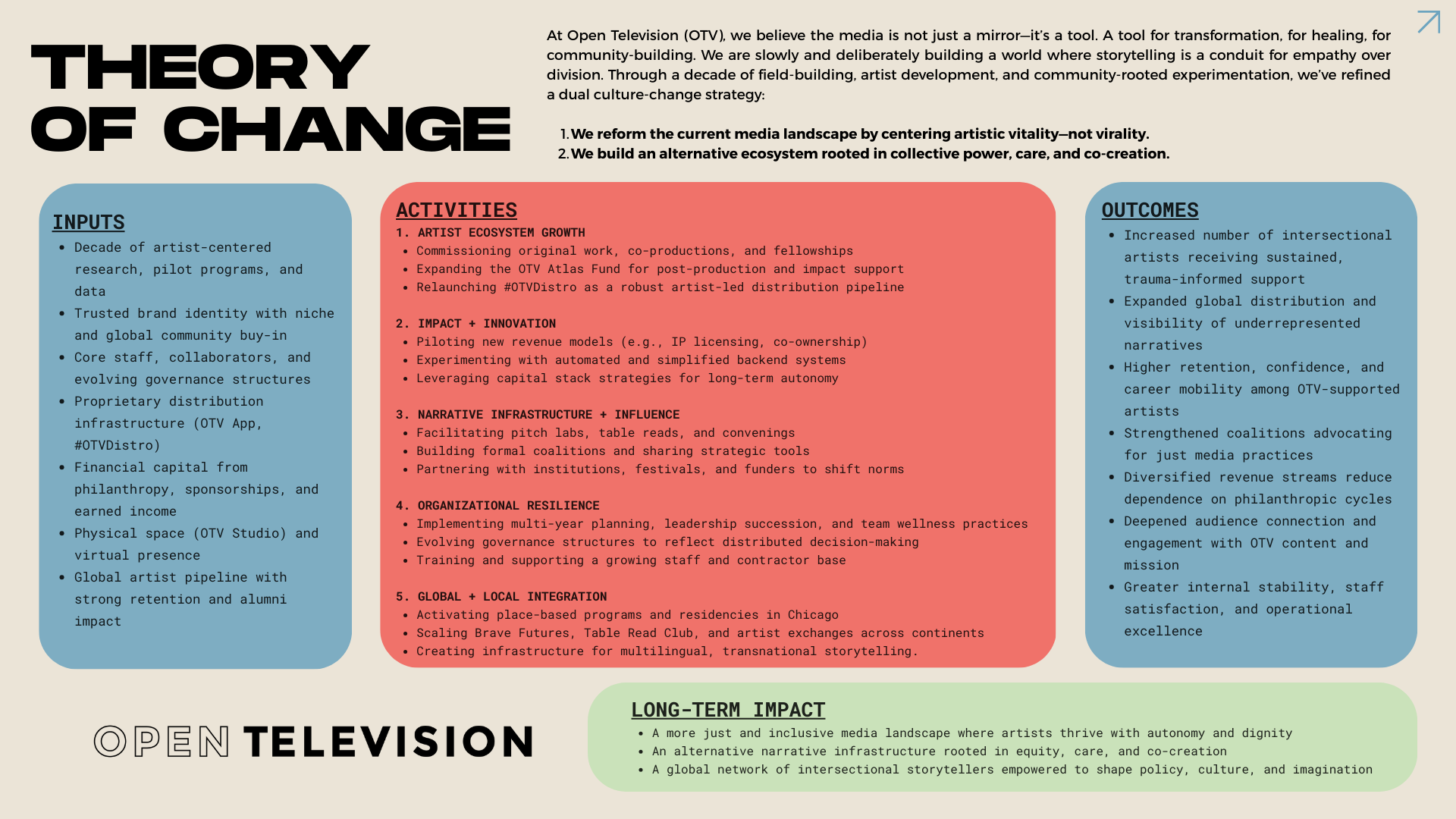
theory of change
Since our inception, Open Television (OTV) has redefined what it means to build narrative power from the margins. Founded as a radical response to exclusion in the entertainment industry, OTV began as a research project and experimental platform to showcase intersectional stories that rarely made it to mainstream screens. Over the past decade, it has grown into a globally recognized non-profit streaming platform and media incubator—one that places artists and their communities at the center of its mission.
What started as a local experiment in Chicago has become a movement, shaping national conversations around equity in media while creating new models of artist support rooted in care, sustainability, and co-creation. This evolution reflects OTV’s commitment not only to developing groundbreaking work, but also to transforming the conditions under which that work is made and shared.
Strategic Framework
At Open Television (OTV), we believe the media is not just a mirror—it’s a tool. A tool for transformation, for healing, for community-building. We are slowly and deliberately building a world where storytelling is a conduit for empathy over division. Through a decade of field-building, artist development, and community-rooted experimentation, we’ve refined a dual culture-change strategy:
We reform the current media landscape by centering artistic vitality—not virality.
We build an alternative ecosystem rooted in collective power, care, and co-creation.
10 Years of Impact: A Retrospective
Over the past decade, OTV has launched and scaled a bold portfolio of programs that not only support intersectional artists but also transform the conditions of creative production, exhibition, and distribution.
From artist development to international engagement, these milestones mark the evolution of OTV’s ecosystem into a globally recognized cultural force:
OTV APP: Launched as the first-of-its-kind intersectional streaming platform, the OTV App has distributed over 500 original titles and built a curated digital archive of artist-driven work. With viewers in over 50 countries, the app serves as a dynamic portal for unfiltered storytelling and a living archive of community-centered media.
OTV Fellows: Now in its sixth year, the OTV Fellowship has supported dozens of independent creators through intentional mentorship, resource-sharing, and customized pathways to exhibition and distribution. Fellows have gone on to secure festival awards, industry deals, and major fellowships, proving that care-centered development yields lasting impact.
OTV Study Hall: Designed as a regenerative learning and healing space, Study Hall bridges artistic practice with research, peer support, and visionary planning. With in-person retreats, creative labs, and field-building sessions, Study Hall is where artists gather not just to refine their craft—but to reimagine what’s possible together.
Brave Futures: This international film race and commissioning program champions queer, trans, immigrant, and Black creatives in North America, Latin America, Southern Africa and beyond. Through rapid ideation and collective mentorship, Brave Futures has launched dozens of experimental shorts, fueling cultural dialogue and disrupting industry norms across borders.
Bridge Initiatives: Nurturing Emerging Work and Deepening Community
Pitch, Please: A dynamic platform for selected OTV Fellows to pitch their projects to industry advisors, funders, and curators. This initiative offers artists a rare opportunity to receive strategic feedback, funding support, and marketing opportunities, further accelerating their creative journeys.
Table Read Club: A traveling series designed to demystify the screenwriting process and build community through live readings and feedback. From Chicago to Mexico City, Table Read Club fosters dialogue, experimentation, and translocal connection among emerging writers and cultural workers.
OTV Studio: Located in Chicago’s South Loop, OTV Studio is a hybrid creative hub that anchors the organization’s local presence. It serves as a production site, meeting space, community lab, and workplace for staff and artists alike. As a physical embodiment of OTV’s commitment to care, collaboration, and creative sovereignty, the studio deepens community ties while providing infrastructure for sustainable storytelling.
State of the Field
Emerging media and cultural trends: Over the past decade, seismic shifts in technology, culture, and audience behavior have transformed the media landscape. As legacy institutions struggle to keep pace, new models rooted in community, care, and co-creation are gaining traction—affirming OTV’s foundational approach.
Decentralization of Media Power: Audiences and creators are moving away from centralized gatekeepers toward platforms and ecosystems that allow for direct access, participatory culture, and creative control. OTV’s artist-first model and app-based distribution meet this shift head-on.
Cultural Infrastructure as Essential Infrastructure: The COVID-19 pandemic, political uprisings, and algorithmic suppression have highlighted the need for independent, values-aligned infrastructure to house and protect community storytelling. Platforms like OTV are more than entertainment—they’re lifelines for cultural memory, resistance, and imagination.
Globalization of Intersectional Narratives: Intersectional stories are no longer niche—they’re global. From Netflix’s diversity push to international festivals spotlighting BIPOC and queer voices, there’s a growing appetite for culturally specific, border-crossing content. OTV’s global footprint through programs like Brave Futures positions it as a key player in this evolution.
Emergence of Alternative Metrics: The industry is beginning to challenge traditional success metrics (e.g., views, likes, box office) in favor of more relational, values-aligned frameworks. OTV’s leadership in relational metrics and narrative impact evaluation puts us ahead of the curve.
Audience as Community, Not Consumers: Today’s audiences are not passive viewers—they're communities seeking alignment, engagement, and co-authorship. OTV’s emphasis on wellness, accessibility, and community-rooted exhibition reflects this deeper shift toward cultural stewardship over market share.
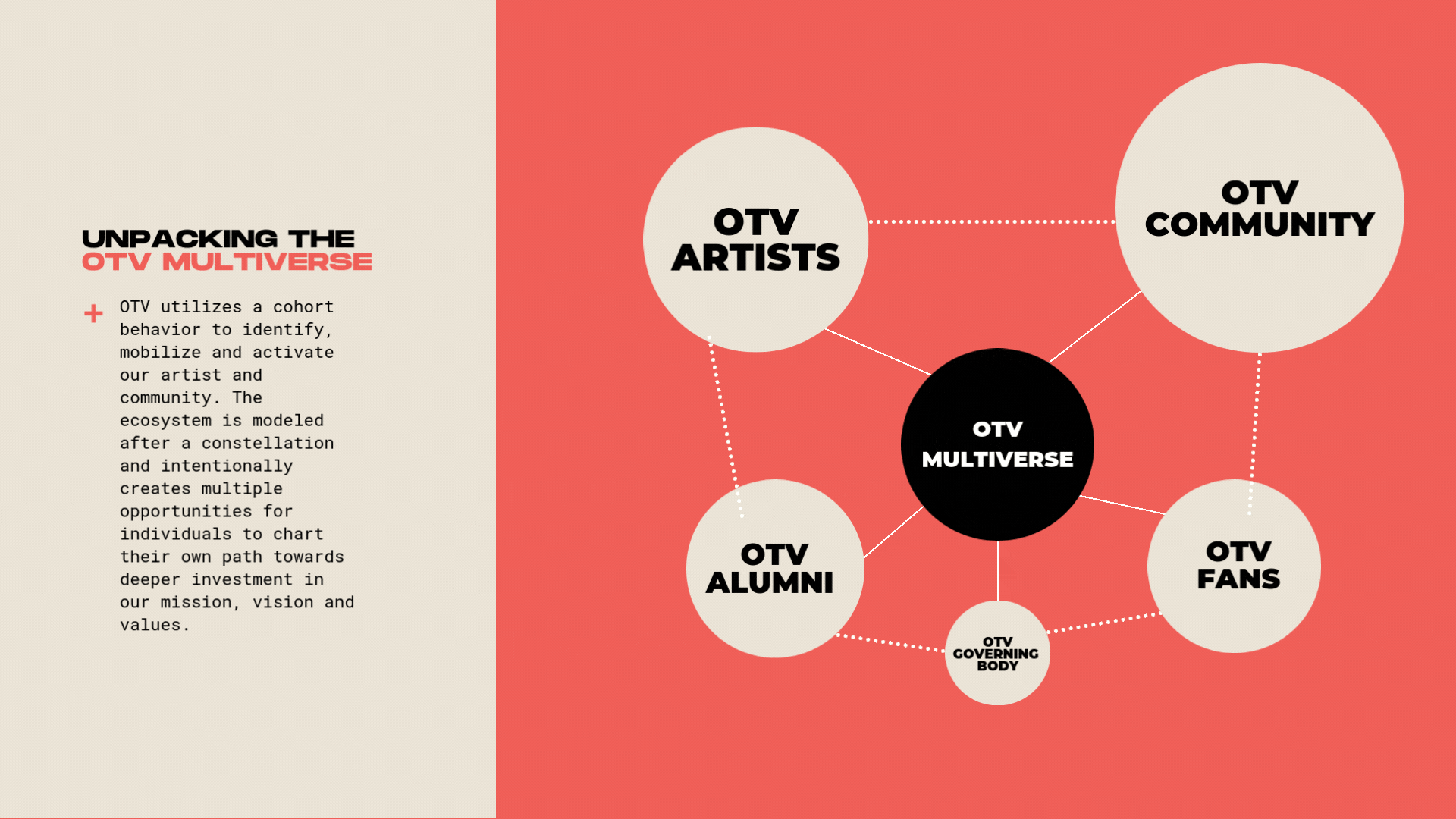
Funding environment for intersectional storytelling and artist: While cultural interest in intersectional storytelling has increased, the structural and financial conditions that support artists remain precarious. OTV operates within—and against—a complex and often contradictory landscape shaped by political hostility, philanthropic volatility, and industry contraction. These dynamics heighten the urgency to build sustainable, community-rooted alternatives.
Shrinking Support for Intersectional Artists in a Hostile Political Climate: Across the U.S., intersectional storytellers—especially Black, queer, immigrant, and trans creators—are navigating heightened threats to their expression, safety, and access to resources. From book bans to anti-trans legislation, the current federal and state-level climate demands increased protection and investment in cultural resilience.
Philanthropy in Flux: The philanthropic sector is evolving—and not always in ways that serve grassroots media ecosystems. While some funders are investing in narrative change, others are shifting priorities, tightening guidelines, or consolidating programs. For many cultural organizations, this results in unstable funding cycles and limited long-term commitments. OTV’s adaptive strategy and research-backed approach position us to meet this moment, but sustained investment remains essential.
Media Industry Retrenchment: Hollywood is in a recession—and retreating. Despite promises of equity and inclusion, major studios and streamers are slashing diverse programming, laying off workers, and deprioritizing new voices. The collapse of DEI departments and pullback of content for “niche” audiences underscore the need for independent platforms like OTV to persist and scale.
The Myth of Scale and the Case for Sustainability: In a landscape obsessed with scale, OTV invites a different question: What does it mean to grow with integrity?Rather than chasing extractive expansion, OTV is investing in circular economies, relational metrics, and regenerative models of artist support. This moment calls for a redefinition of scale—not as breadth alone, but as depth, care, and cumulative community power.
Diversifying Revenue as a Strategy for Liberation: To navigate these conditions, OTV is actively diversifying its revenue streams—blending earned income, philanthropic support, creative partnerships, fiscal sponsorships, and co-productions. Building economic sovereignty is not just a financial strategy—it’s a political one. OTV’s future depends on our ability to model sustainable, liberatory business practices that redistribute power to artists and their communities.
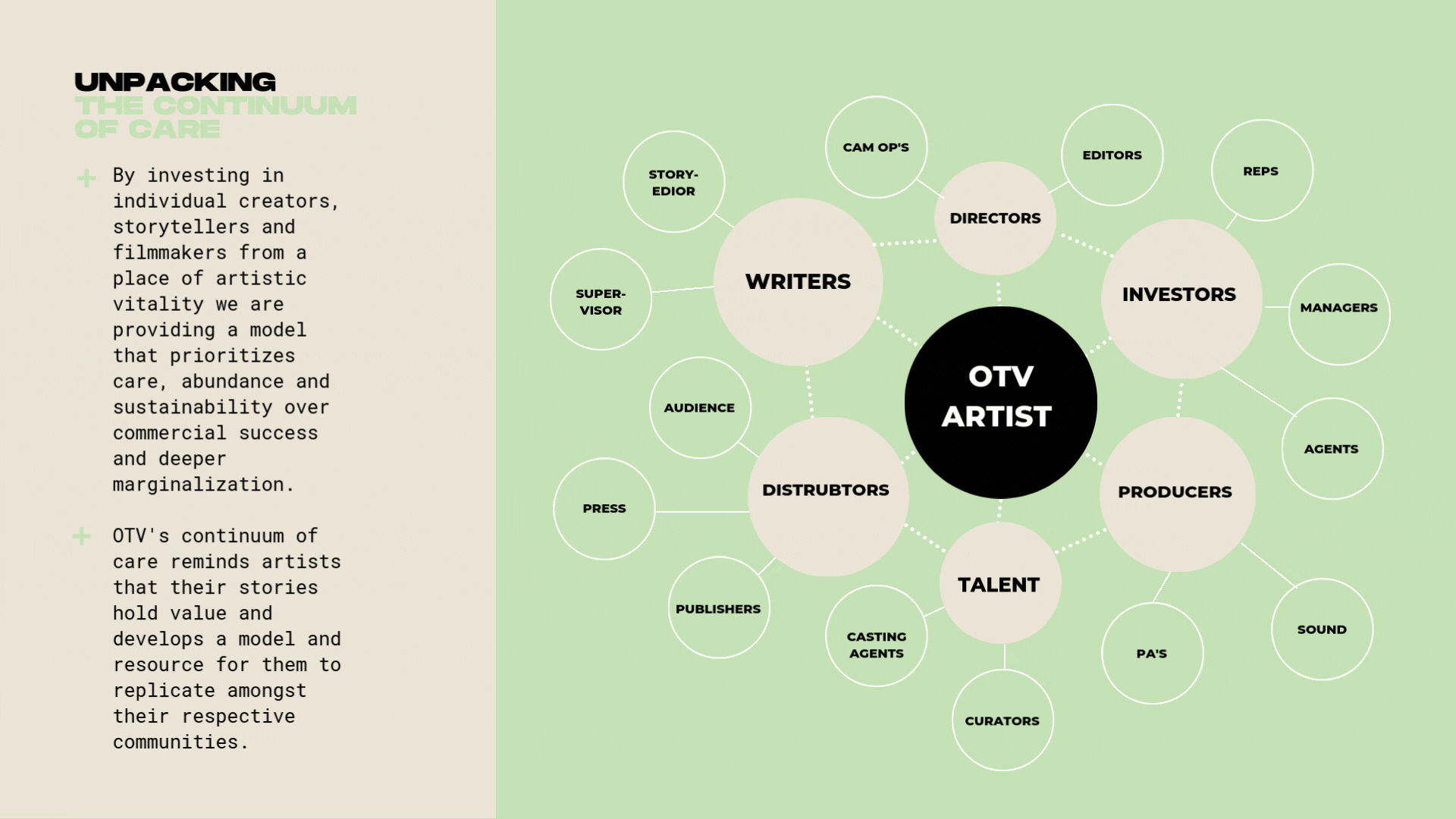
OTV’s Unique Positioning in Narrative Infrastructure: In a media ecosystem marked by instability, consolidation, and cultural retreat, Open Television (OTV) stands as a rare and necessary force—offering both the technological infrastructure and cultural imagination to sustain a more just and expansive narrative future. Our unique positioning allows us to operate as both a platform and a practice, advancing a model of storytelling that is sustainable, generative, and deeply relational.
A Distribution Platform with a Niche Audience Primed for Scale: The OTV App is more than a content archive—it is a curated digital ecosystem where audiences can discover and support intersectional stories on their own terms. Unlike mainstream platforms, which often flatten or erase identity-driven content, OTV’s infrastructure is intentionally designed to uplift nuance, complexity, and care. Our dedicated niche audience is not only loyal—they are ready for deeper engagement, making OTV primed for strategic and sustainable scale.
The Trust of a Global Community of Artists, Partners, and Funders: Over the last decade, OTV has built uncommon trust across sectors. Artists turn to us for developmental support and distribution rooted in integrity. Partners see us as a bridge to underrepresented talent and authentic storytelling. Funders recognize us as a high-impact, values-driven organization committed to measurable and meaningful change. This constellation of relationships forms the heart of our narrative infrastructure: resilient, reciprocal, and future-facing.
A Proven Track Record for Cultivating Impact Beyond the Screen: OTV doesn’t just distribute stories—we help transform the conditions under which stories are told, received, and remembered. Through fellowships, convenings, film races, and research-backed models, we have demonstrated the ability to drive impact that extends beyond viewership. Whether through healing-centered development, policy-informing publications, or transnational artist exchanges, our programs nourish what we call “artistic vitality”—the conditions artists need not just to survive, but to create work that changes culture.
In short, OTV is not simply responding to the needs of the field—we are shaping the future of it. As a streaming platform, media incubator, and movement hub, OTV offers a tested, trusted, and visionary framework for sustaining intersectional storytelling at scale .
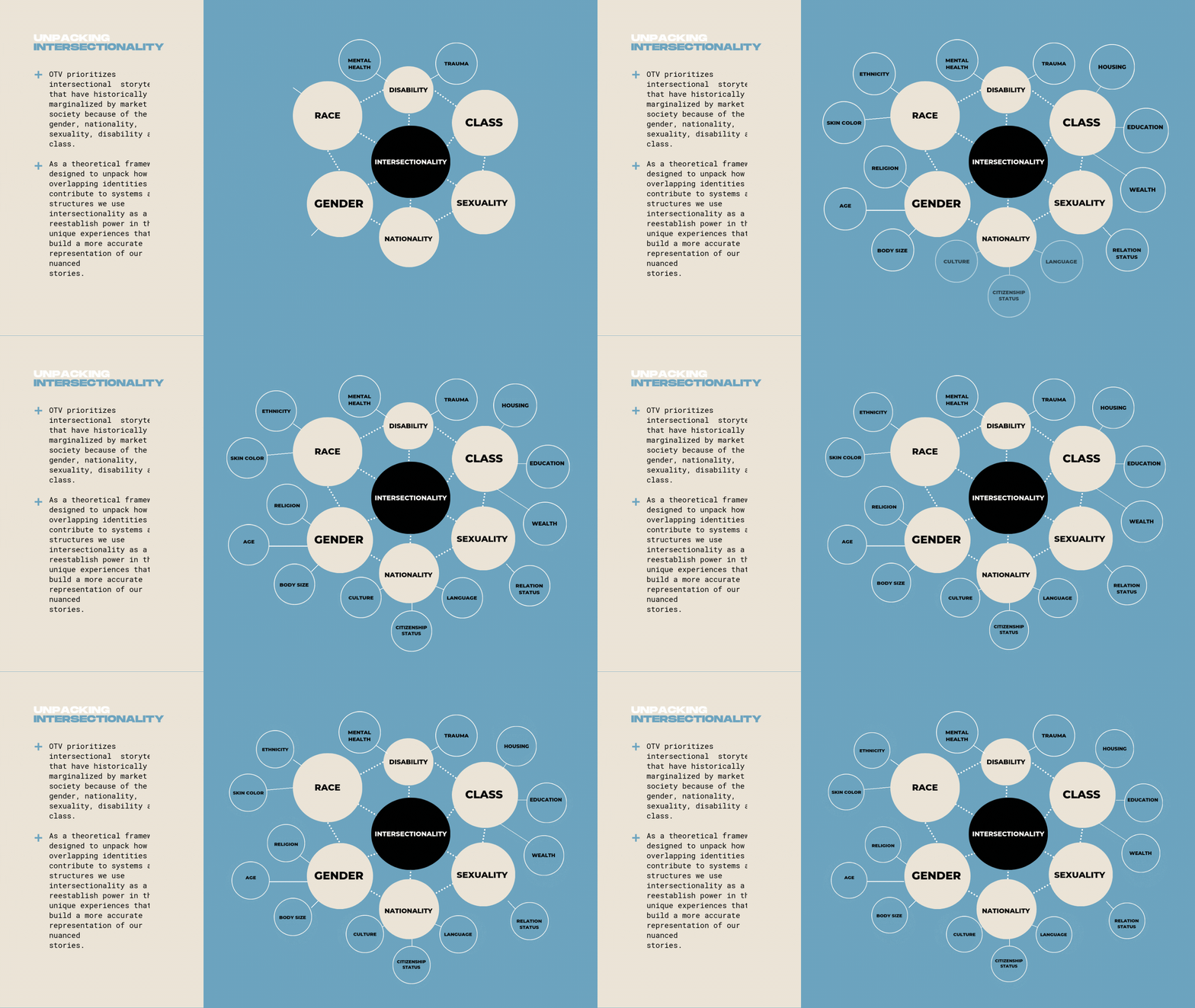
FY26-30 | Strategic Vision
Guided by a decade of learning and propelled by a deepened sense of purpose, Open Television’s strategic priorities for FY26–30 are centered on building sustainable systems that uplift artists, expand narrative influence, and ensure long-term organizational resilience. Each priority reflects our commitment to transforming the conditions under which intersectional stories are created, distributed, and preserved.
At the core of this work, we are committed to:
Amplifying intersectional storytelling and storytellers
Cultivating an alternative media ecosystem
Contributing to an equitable development pipeline for artists and their audiences
Detailed Strategic Priorities:
1. Artist Ecosystem Growth: We will invest in the next generation of intersectional storytellers through expanded artist support systems designed for longevity, scale, and relational impact.
Key Initiatives:
Co-productions with aligned partners across film, TV, and digital platforms
Expansion of the OTV Atlas Fund: micro-grants for post-production, strategy, and impact campaigns
Relaunch and scale of #OTVDistro to include licensing, monetization, and curated exhibitions rooted in activating our 500+ title archive
2. Impact + Innovation: We will cultivate new forms of sustainability by reimagining how capital flows to artists, programs, and the platform itself.
Key Initiatives:
Development of diversified revenue models: co-productions, earned income, IP licensing
Expansion of our capital stack: philanthropic, venture, and community-based financing
Increased experimentation with simplification and automation of systems to improve efficiency and access
3. Narrative Infrastructure + Influence: We will deepen OTV’s role as a builder of narrative infrastructure—co-creating platforms, pipelines, and coalitions that shift culture and power.
Key Initiatives:
Expanded distribution models across community, academic, and cultural/artistic institutions
Increased strategic partnerships with funders, festivals, and exhibition venues
More formalized coalitions and alliances that advocate for equity in storytelling and media systems
4. Organizational Resilience: We will strengthen our internal systems, operations, and leadership models to ensure long-term sustainability and alignment with our values.
Key Initiatives:
Multi-year financial planning, forecasting, and reserve growth
Evolution of our governance structure to reflect collective leadership, fiscal accountability and organizational resilience
Implementation of a thoughtful leadership succession strategy
Ongoing investment in team wellness, professional development, and restorative practices
5. Global + Local Integration: We will build deeper roots in Chicago while expanding our national and global footprint through reciprocal partnerships and programmatic exchanges.
Key Initiatives:
Activation of hyperlocal programming in Chicago with community co-design
Strategic expansion of international initiatives like Brave Futures and Table Read Club that sustains artist pipeline.
Cultivation of a transnational artist network committed to shared learning and solidarity.
As Open Television (OTV) enters its second decade, we are not just scaling—we are transforming. We are shaping a new kind of media infrastructure: one rooted in care, creativity, and collective power. We are cultivating ecosystems where artists can thrive, where culture is a site of healing, and where storytelling becomes a tool for justice. But we cannot do it alone.
What We Need: To bring this bold vision to life, we are seeking aligned co-conspirators across sectors and geographies. Specifically:
Investment: Multi-year philanthropic partnerships, catalytic capital, and earned revenue strategies that sustain artist pipelines and operational resilience.
Advocacy: Champions who will uplift our vision in spaces of influence—philanthropic, legislative, academic, and beyond.
Thought Partnership: Strategic collaborators willing to test, iterate, and imagine new systems of sustainability and scale with us.
Artist Referrals: Intersectional storytellers and creative practitioners ready to join a global network reshaping what media can be.
Opportunities to Build with OTV: Whether you are a funder, cultural institution, media platform, educator, or artist collective, there are countless ways to activate with us:
Fund: Invest in the next generation of intersectional storytellers through fellowships, co-productions, and ecosystem-building efforts.
Partner: Co-create initiatives, convenings, research, and platforms that reflect shared values and strategic alignment.
Amplify: Use your voice and networks to uplift OTV’s artists, stories, and milestones—expanding reach, legitimacy, and community.
An Invitation to Co-Create: OTV is designing the future of media with those historically pushed to the margins—placing them at the center. This is your invitation to join us in shaping the next era of intersectional storytelling.
For over a decade, Open Television (OTV) has dared to ask:
What becomes possible when care is the currency and community is the infrastructure?
What started as a question, a whisper, a pilot—has grown into an undeniable force. OTV has become a sanctuary, a launchpad, and a living experiment in how media can heal, resist, and transform. We have witnessed the ripple effects of this vision: storytellers stepping into their power, ecosystems forming around radical tenderness, and a model of cultural production that does not extract, but restores.
As a governing body, we are deeply humbled to steward this next chapter. This FY26–30 Strategic Vision is not just a document—it is a compass. It reflects what we’ve learned, what we’re committed to protecting, and what we’re ready to imagine anew. It affirms our belief that storytelling is not just an art form—it is a lifeline. And those brave enough to tell the truth deserve more than a platform—they deserve a future.
We offer this roadmap with immense pride and reverence for those who made the last ten years possible. Your belief, your brilliance, your boldness—these are the roots that ground us.
📖 Read. 🌱 Reflect. 🔊 Listen.
We invite you to experience the full scope of our journey through the Beyond the Screen Multimedia Publicationublication—a living archive of essays, interviews, and audio reflections documenting OTV’s first decade.
We also uplift critical thought leadership from co-founder Aymar Jean Christian, including Open TV: Innovation Beyond Hollywood and Reparative Media—texts that contextualize our work within broader movements for media justice, cultural sovereignty, and collective care.
✨ The Invitation
Join us. Whether you fund, partner, amplify, or simply bear witness—your presence matters. Together, we are shaping the next era of intersectional storytelling. From seed to bloom. From screen to soul. From story to system. For deeper partnership inquiries, reach out anytime at: admin@weareotv.com
With care, commitment, and deep gratitude,
— The Governing Body of Open Television (OTV)

“the future is ours to make.”
Octavia E. Butler